


Japan has had padel courts since 2013, but finding a game still takes a little local knowledge. The scene is relatively small, clubs use their own booking systems, and language can make arranging a session harder than it needs to be.
Global Padel Hub founder Jack Taylor sat down with Tomoaki Murasawa, known as Tom Jack, to understand where Japanese padel stands and which clubs he recommends for visiting players. A Japanese national team coach, Tom brings a perspective shaped by both competitive padel and the everyday club scene.
The conversation comes at a significant moment. Japan’s Kae Tokumoto and Saki Tsukamoto won women’s doubles gold at the 2026 Aichi-Nagoya Asian Games, where padel made its Games debut. For Tom, that visibility could help the sport reach a wider audience at home.
Where Padel Stands in Japan
Japan was an early adopter of padel in Asia. According to Tom, the sport arrived in 2013, followed by the establishment of the Japan Padel Association in 2016. While the number of new courts has not grown as quickly as in some other Asian markets, the development of Japan’s playing community tells a more substantial story.
With roughly 25 clubs, Japan’s infrastructure remains modest. Yet court numbers alone do not capture its progress: local players and coaches are increasingly driving development, and the national teams have emerged among the region’s strongest. This points to a more gradual, locally sustained model of growth rather than an absence of momentum.
More landowners are considering padel courts, creating opportunities to build on that existing foundation. The challenge is to turn interest into accessible venues and regular participation without overlooking the community and competitive standards already established.
Padel will likely remain centred on cities such as Tokyo, Osaka and Nagoya. Tom sees established groups taking up padel together as an important route to growth: friends, colleagues and existing sporting communities can give a new club a regular player base.
For travellers, the practical implication is straightforward. Start by checking clubs that are most tourist-friendly rather than assuming every destination will be easy to access.
Who Plays Padel in Japan?
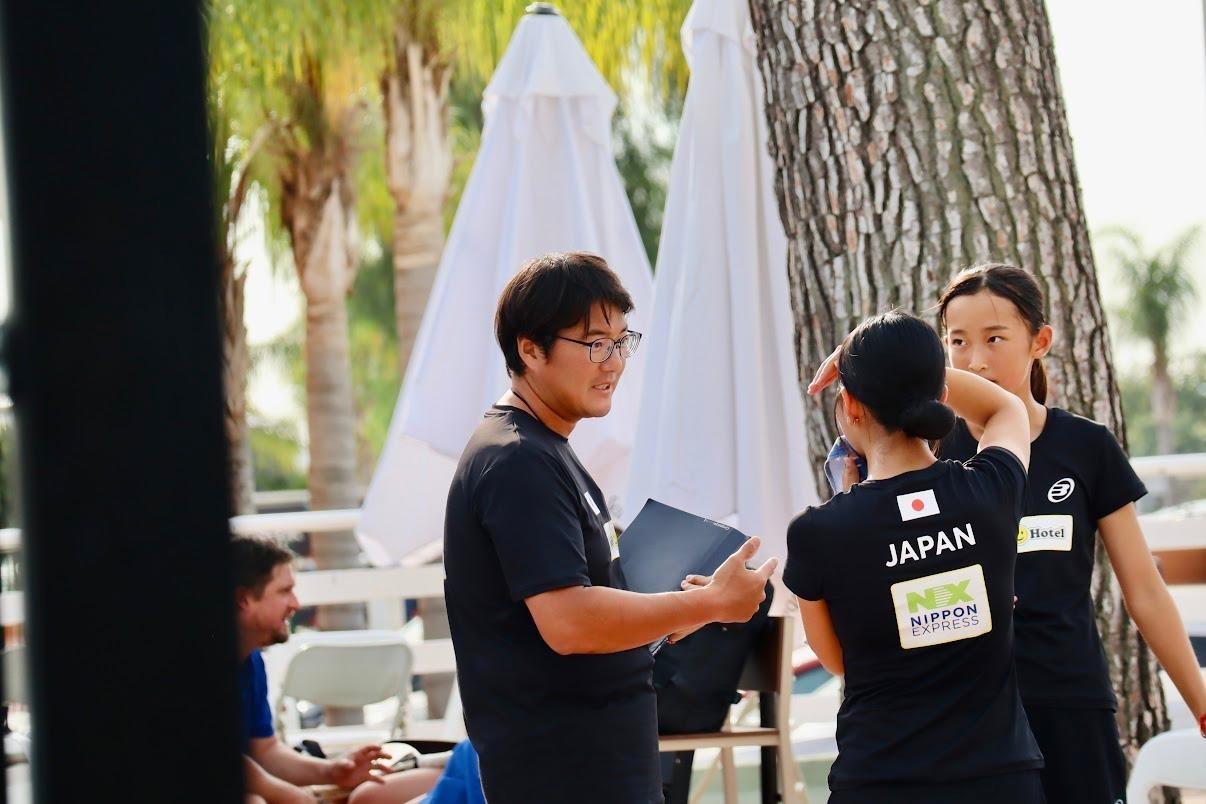
Japan’s padel players are typically former tennis players in their late twenties or early thirties, including people working in technology and other service industries.
On court, Japan’s amateur playing standard is strong within Asia. Committed players have invested time in improving, helping a relatively small community develop considerable competitive depth. Japan’s women’s national team won the inaugural FIP Asia Padel Cup in 2025, a sign of the strength of its homegrown talent.
Where to Play Padel in Tokyo
Tom highlights three options in Tokyo, with different levels of convenience for visitors.
Padel Tokyo Mizumachi
For someone fitting padel around sightseeing, Padel Tokyo Mizumachi is Tom’s first suggestion. The courts sit near Tokyo Skytree, giving you a recognisable landmark and a setting that feels distinctly Tokyo.
The club has three outdoor courts and can be reached from Tokyo Skytree, Honjo-Azumabashi and Oshiage stations. That makes it easier to work into a city itinerary than a longer journey into the suburbs. Daytime availability can be easier to find, while evening play needs more planning.
Padel Tokyo
Padel Tokyo is based within Zenpukuji Park Tennis Club in Nerima. Tom describes it as a more suburban option, requiring extra travel compared with Mizumachi.
Captain Tsubasa Padel
Captain Tsubasa Padel is in Chofu, away from the main sightseeing areas. Its official directions give a walk of around ten minutes from Nishi-Chofu station or thirteen minutes from Chofu station.
Tom’s point is about convenience: it takes a more deliberate journey for a visitor staying centrally.
Tom’s Favourite Padel Clubs Beyond Tokyo
Padel Nagoya
Padel Nagoya is one of Tom’s strongest recommendations. The club has two outdoor rooftop courts at MultinaBox in the Osu district, around six minutes’ walk from Kamimaezu station. Its location makes it a practical option for combining a session with time in the city.
Padel Dojo, Amagasaki
Padel Dojo stands out in Tom’s shortlist for international visitors. Located in Amagasaki near Osaka, it has four courts, including two covered options, and is English-language friendly.
The club is about five minutes’ walk from Hanshin Amagasaki station, around ten minutes from Osaka-Umeda, making it manageable for players based in Osaka.
For solo travellers, there is a useful extra: the club helps look for playing partners within its community if contacted in advance.
Padel Osaka
Padel Osaka offers indoor play and a convenient connection to the city’s underground network. It is around three minutes’ walk from Kita-Tatsumi station on the Sennichimae Line, with the club advertising a journey of around fifteen minutes from Namba.
Padel in Kyoto
Padel Kyoto, Y’s Sports Garden is in Ohara, in northern Kyoto. This recommendation centres on the surrounding temple scenery and the appeal of playing somewhere beyond the city’s busier sightseeing areas. Treat this as a planned excursion.
Padel Fukuoka
For travellers heading to Kyushu, Tom recommends Padel Fukuoka. The club has two covered courts in Kashihama, giving you an option for playing while exploring the city.
Chigasaki Padel Club
Tom likes Chigasaki Padel Club for its owners and relaxed coastal character. The club has two outdoor courts. It is a different proposition from squeezing a game into a city break: consider it when spending time in Chigasaki or planning a visit around the area.
How to Arrange a Game in Japan
Booking and communication are the main hurdles for travelling players. Tom’s advice is to work directly with clubs rather than expecting the same app or international player network you use at home.
Check the official website for court reservations, events and contact details. Several clubs, including Padel Tokyo Mizumachi and Padel Nagoya, publish official LINE accounts. Others provide email, enquiry forms, or their own reservation systems.
How Much Does Padel Cost in Japan?
Prices vary by club, time, and session type, and the cost can be a barrier to entry, particularly for students, although some clubs offer student discounts. As a reference, Padel Nagoya lists court hire at ¥4,500 (approximately US$28) per hour on weekday daytimes, ¥5,100 (US$32) on weekday evenings, and ¥5,800 (US$37) on weekends and public holidays.
Finding Your Place in Japanese Padel
Tom’s recommendations offer several ways into the scene: a game near Tokyo Skytree, an introduction to the community at Padel Dojo, or a session worked into a visit to Nagoya, Fukuoka or Chigasaki.
The useful first step is to choose a club that fits your route, then contact it with your dates and level. Establish whether you are booking a court, joining a game, or arranging coaching, and confirm the details before you go.
You can learn more about Tom through his Global Padel Hub coach profile.